Why ATMs Can Help Drive More Impulse Spending in New Jersey Small Businesses
- March 24, 2026
- admin
- 2:40 pm
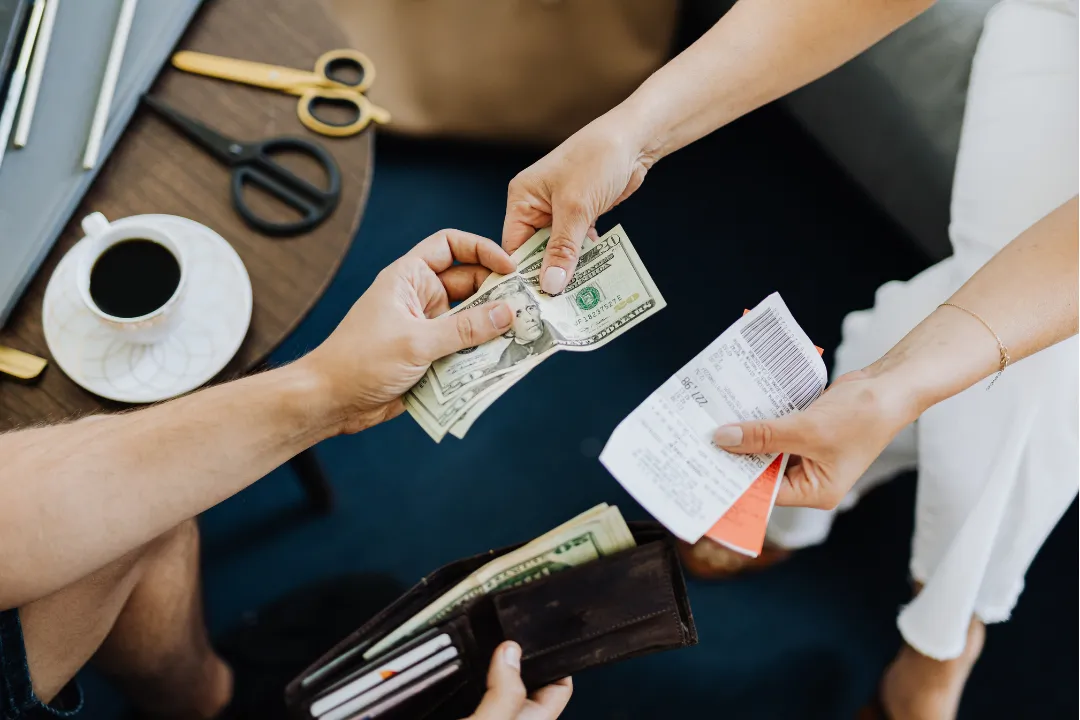
Impulse buying often happens when convenience, timing, and customer readiness come together in the same moment. A customer sees something they want, decides quickly, and buys it on the spot without much planning. For small businesses in New Jersey, that moment can be lost just as quickly if the customer does not have enough cash and has to leave the store, venue, or business location to find an ATM somewhere else. An on-site ATM helps reduce that friction by giving the customer immediate access to cash right where the purchase decision is happening. That can be especially valuable in customer-facing businesses such as convenience stores, gas stations, restaurants, bars, smoke shops, liquor stores, salons, retail stores, and tourism-related businesses. New Jersey’s visitor economy is also substantial, with 123.7 million visitors and a record $50.6 billion in visitor spending in 2024, which reinforces how much in-person, location-based buying activity moves through the state. In busy markets like Newark, Jersey City, Paterson, Elizabeth, Edison, Trenton, Camden, and Atlantic City, a well-placed ATM can support both customer convenience and stronger spending opportunities at the exact point where impulse purchases are most likely to happen.
Easy Access to Cash Helps Customers Complete Unplanned Purchases Faster
One of the biggest reasons ATMs can promote impulse buying is simple: they remove a common barrier between wanting to buy and actually making the purchase. Many small-business transactions happen quickly and emotionally. A customer may spot an item near the counter, decide to add one more product, grab a drink, buy a second item for convenience, or make a spontaneous purchase while already at the register. If that customer does not have enough cash on hand and prefers or needs to pay in cash, the sale can disappear just as quickly as it appeared. An ATM installed at the business gives that customer a direct way to solve the problem immediately. Instead of leaving to find cash elsewhere, the purchase can still happen on-site, with far less interruption to the shopping experience.
This matters in New Jersey because many small businesses operate in dense, fast-moving commercial environments where convenience affects how customers behave. Neighborhood retail zones, downtown strips, nightlife districts, transportation-linked corridors, and shore-area business centers all create settings where customers often make quick spending decisions. In these environments, time matters. The easier it is for someone to access cash at the moment they want to buy, the more likely the business is to capture that sale. An ATM supports that convenience by keeping the customer engaged inside the location rather than allowing the impulse moment to fade once the customer walks out the door. For small businesses trying to maximize every visit, that can be a practical and recurring advantage.
On-Site ATMs Help Keep Spending Inside the Business Instead of Sending It Elsewhere
Impulse buying is strongly connected to immediacy. If a customer has to pause the purchase, leave the business, walk down the street, or drive to another ATM, there is always a risk that the purchase will be delayed, reduced, or abandoned entirely. In some cases, the customer may not return at all. That is why an ATM can serve a bigger role than just cash access. It helps preserve spending that is already in motion. For a small business, especially one with frequent low-to-mid-size purchases, that can matter every single day. A few extra transactions per day, driven by convenience, can add up over time in ways that are meaningful for a local operator.
This is especially relevant in New Jersey, where businesses often compete closely for local traffic and visitor spending. The state’s tourism totals show how much money flows through food, entertainment, recreation, hospitality, and local retail channels each year, and that creates many situations where customers are already in a spending mindset while moving through active business areas. In a convenience store near a commuter route, a restaurant in a busy neighborhood, a boardwalk-adjacent retail shop, or a nightlife-oriented business in a dense city market, keeping the customer on-site can be the difference between a lost sale and a completed one. An ATM supports that outcome by making the spending process easier at the precise moment when the customer is most likely to act impulsively.
Impulse Buying Often Increases When a Business Feels More Convenient Overall
Small businesses do not usually earn impulse sales from one factor alone. They earn them because the overall customer experience feels easy. An ATM contributes to that feeling by making the location more useful and more complete. Customers notice when a business has thought about their real needs. If they can shop, browse, decide quickly, and access cash without leaving, the entire experience feels smoother. That sense of convenience can encourage extra purchases, especially when customers are already making fast decisions about snacks, drinks, add-on products, small personal items, entertainment spending, or quick service purchases. In practical terms, the ATM becomes part of the store’s ability to support spontaneous buying behavior.
That kind of convenience matters in New Jersey because the state has a highly active small-business environment supported by official resources aimed at helping businesses operate and grow. Businesses here often work in competitive local markets where small service advantages can shape repeat customer behavior. A store or venue that feels convenient is often remembered more positively than one that forces customers to solve their own payment problem off-site. When that convenience includes direct access to cash, it can support stronger impulse behavior over time because customers know the business is prepared for how they actually spend. For many New Jersey small businesses, that is not a minor benefit. It is part of what helps the location feel easier, faster, and more usable than nearby alternatives.
ATMs Can Support Small Purchases, Add-On Sales, and Cash-Based Decision Making
Impulse buying is often tied to smaller or unplanned purchases rather than major transactions. A customer may come in for one item and leave with three. They may plan to spend a little and decide to spend more once they feel they have access to enough cash. In this way, an ATM can support not just one transaction, but a broader pattern of in-store behavior. Businesses that sell convenience items, beverages, snacks, small accessories, personal care products, nightlife-related purchases, or event-day items often benefit from this kind of customer behavior because many of the sales are quick, low-friction, and tied to the customer’s immediate mood or need. An ATM helps those moments happen more naturally by removing one of the most common obstacles: limited cash on hand.
New Jersey has many business environments where this is especially relevant, including urban storefronts, shore-area retail, event-oriented districts, hospitality settings, and commuter-heavy zones where customers often make practical or spontaneous purchases during short stops. In those situations, the ATM can support the type of buying behavior that small businesses rely on every day. It does not need to create demand from nothing. It simply needs to make it easier for a customer who is already ready to buy. That is why an ATM can be viewed as more than a transaction machine. For the right small business, it becomes part of the environment that supports faster decisions, easier add-on purchases, and stronger in-store sales activity.
In the Right New Jersey Location, an ATM Can Turn Everyday Foot Traffic Into More Sales Opportunity
The real reason ATMs can promote impulse buying is that they help businesses do more with the traffic they already have. A small business does not necessarily need to increase marketing spend or change its entire model to benefit from impulse-driven sales. In many cases, it just needs to reduce friction at the point where people are already willing to spend. An ATM helps do that by serving the customer at the exact moment convenience matters most. The machine supports quick withdrawals, keeps the transaction inside the business, and gives the customer a simple path from interest to purchase. When that happens repeatedly, the ATM can support a stronger pattern of everyday sales opportunity without changing the business’s core offering.
That is especially useful in New Jersey because business activity is constant across many different types of local markets. From urban commercial corridors to hospitality zones, from neighborhood retail areas to visitor-heavy destinations, businesses are often working with existing foot traffic that could produce more value if the customer experience were just slightly easier. An ATM can be one of those small but meaningful improvements. In the right setting, it helps turn ordinary visits into better spending opportunities, supports customer convenience, and gives the business another way to strengthen day-to-day revenue potential. That is why, for many New Jersey small businesses, an ATM is not just a service feature. It is part of a smarter local sales strategy.